
Paint, Poetry, and Permission to Heal: How Creative Expression Transforms the Lives of Child Abuse Survivors

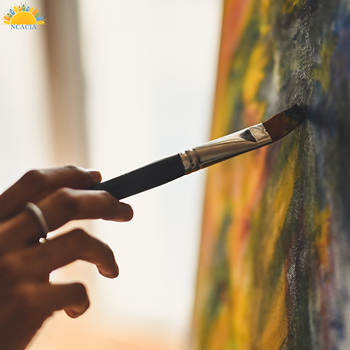
For a child who has survived abuse, words can fail. Therapy can feel too formal. Talking about “what happened” might be impossible—or simply not safe yet.
But put a paintbrush in their hand, hand them a camera, or let them write a story where they control the ending, and suddenly… something shifts.There’s power in expression. There’s healing in creation. And for many survivors, creative expression becomes the bridge between trauma and recovery.
Whether you’re a parent, teacher, CPS worker, therapist, law enforcement officer, or Child Advocacy Center (CAC) staff—understanding the role of creativity in healing is essential.
This post highlights the key truths about how creative outlets support recovery—and how we can support those outlets for the children and teens who need them most.
Why Creativity Works When Words Don't
Children who have been abused often carry deep, complicated emotions—fear, shame, rage, confusion. These emotions don’t always have language.
Creative expression allows the body and brain to release what words can’t explain.
Art bypasses the prefrontal cortex and taps into sensory memory.
Music helps regulate the nervous system.
Writing helps survivors rewrite their story on their own terms.
In other words, creative tools don’t require the survivor to “say everything” to begin healing. That’s what makes them powerful.
Creative Expression is Not Just a Hobby—It’s a Form of Survival
Let’s be clear: this isn’t about keeping kids “busy.” For many survivors, art is how they stay alive.
It’s how they:
Process feelings too scary to say out loud
Imagine new realities where they feel safe
Reclaim control over their narrative
Build emotional resilience and regulation
Whether it’s graffiti on a notebook or a whispered lyric they hum on repeat—these acts of expression can be life-saving coping strategies.
What Counts as Creative Expression? (Spoiler: Almost Anything)
Creativity doesn’t only happen with paint or poetry. It happens anywhere kids find room to express, explore, or create without judgment.
Some examples include:
Drawing, coloring, or painting
Writing poems, stories, or journals
Singing or songwriting
Dance or movement
Photography or video creation
Theater or role play
Crafting or sculpture
What matters most isn’t the product—it’s the freedom and safety of the process.
Creative Healing is Especially Powerful for Kids Who Struggle with Traditional Talk Therapy
Some children and teens:
Shut down in therapy
Feel overwhelmed by direct questions
Don’t yet have the vocabulary for what they’ve lived through
Creative modalities offer a non-linear, non-verbal path to healing. They’re especially effective for:
Young children (under 12)
Teens with complex trauma
Youth on the autism spectrum
Survivors of sexual abuse or trafficking
Creative therapy is not a replacement for trauma treatment—it’s a gateway into it.
How Parents and Professionals Can Support Creative Healing
You don’t have to be an artist to foster creativity. You just need to make space for it.
Here’s what you can do:
Normalize creative expression. Let kids know it’s okay to draw their feelings or write about their dreams.
Avoid interpreting their art. Let them lead. Ask open-ended questions like “Tell me about this” instead of “Is that your abuser?”
Provide materials without pressure. Markers, clay, journals, musical instruments. Let them pick what resonates.
Partner with art or music therapists. Especially in CACs, residential programs, and foster care.
Advocate for arts in schools and community programs. For some survivors, that’s their only outlet.
Most importantly: protect the space. A child can’t create safely in an environment where they feel judged, rushed, or controlled.
Final Thoughts: Expression is Healing
Creative expression doesn’t erase trauma. But it gives children the tools to move through it—to shape something beautiful from what was broken, and to finally feel seen in a way that doesn’t retraumatize.
In a world that often tells survivors to “move on” or “just talk about it,” creative outlets say, “You get to tell your story your way.”
And for a child who was once silenced, that freedom is everything.


